
Where the rivers meet
From its source in the Swiss Alps the Rhine winds through six countries, until in the Netherlands it splits into a web of smaller rivers. With the Maas and the Scheldt it forms the largest river delta in northern Europe, and the Dutch have spent a thousand years making it liveable: as the saying goes, God created the world, but the Dutch created Holland.
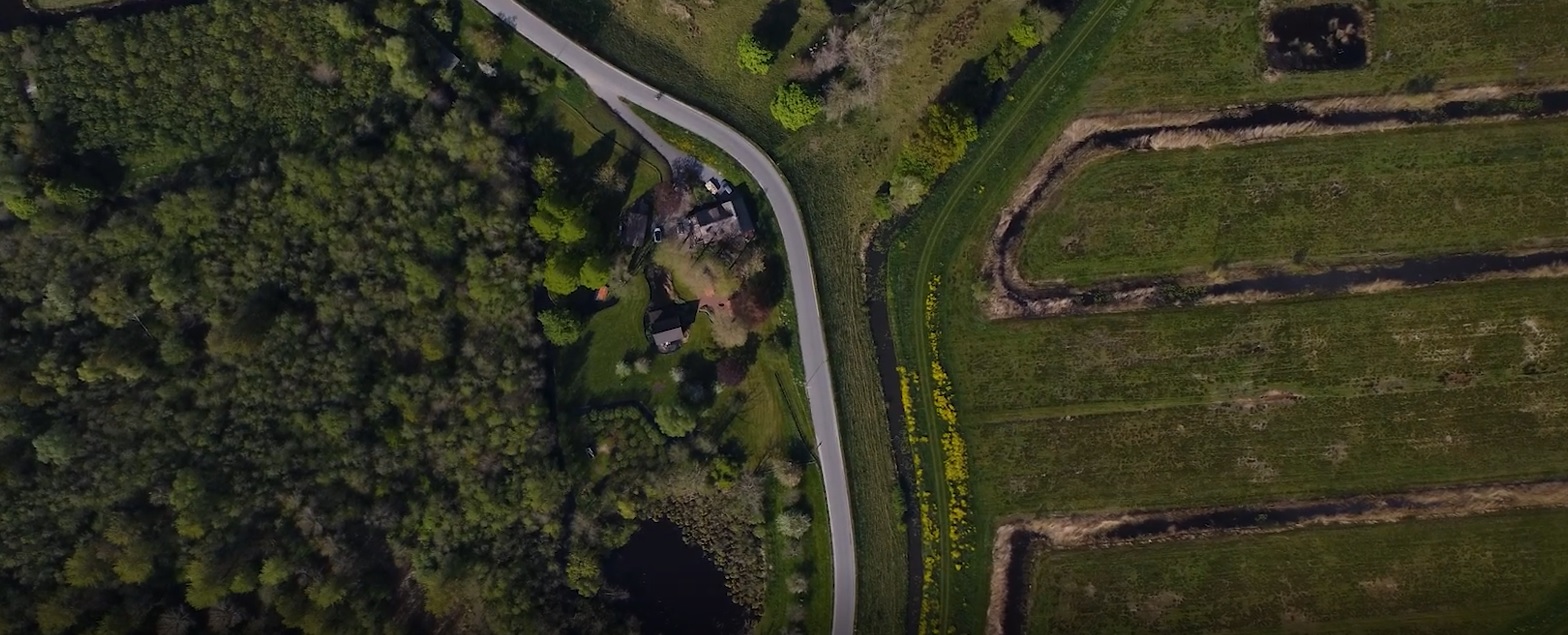
We sit in the heart of that delta. To the south-east lies the Betuwe, between the Lek and the Waal: the orchard of the Netherlands, pink and white with cherry, apple and pear blossom every spring. To the north-west lies the Green Heart, the quiet meadows ringed by Amsterdam, Rotterdam, The Hague and Utrecht. The Diefdijk is where the two meet.
The Stolen Dike
The Diefdijk (say deef-dike) dates from 1284, built to protect the low-lying Vijfheerenlanden from floodwater coming from the Betuwe. Legend has it the land was seized from local farmers without payment, so they called it the Thief's Dike, and the name stuck.
Why a dike 60 km from the sea? Rivers flood too: seawater pushing upstream, meltwater from the Alps pouring down.
It is still a working flood defence today, a second line behind the river dikes, protecting the Alblasserwaard and the Vijfheerenlanden. If it rains, don't worry: the cottage is on the dry side.
The dike was also a border. For centuries Holland lay on our side and Gelderland on the other; since 2020 our side is the province of Utrecht. Step off the far side of the dike and you are in Gelderland.
The New Dutch Waterline
In the nineteenth century the Diefdijk became part of the New Dutch Waterline (Nieuwe Hollandse Waterlinie): an ingenious defence line that protected Holland by deliberately flooding chosen land, a strip 85 km long and 3 to 5 km wide, to stop an invading army. Since 2021 it has been part of the UNESCO World Heritage site of the Dutch Water Defence Lines.
Its last use was in May 1940. The Luftwaffe simply flew over the water; after the bombing of Rotterdam the Netherlands surrendered within days. The concrete casemates along the dike were built in 1939, and the famous sliced-open Bunker 599 is a ten-minute walk away.
De Waai
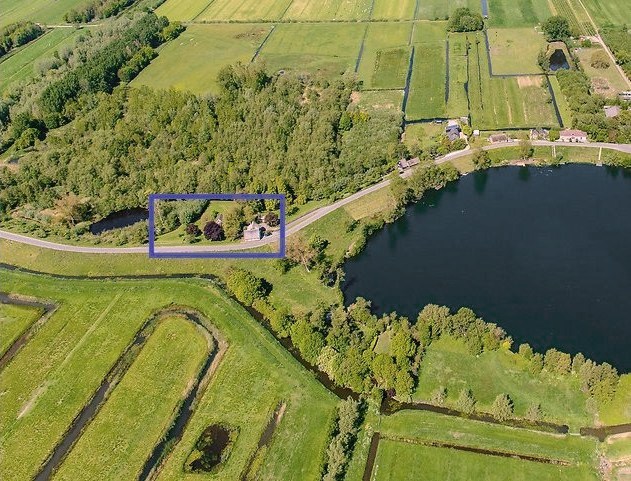
The lake across the road is not really a lake, and its calm hides a turbulent past. On 13 January 1497, probably after ice damaged the dike, it broke, and the water forced through the breach so violently that it spun a vortex and scoured out a hole 230 m across and 25 m deep. The Dutch call it a wiel, a wheel, after the whirlpool that made it. The dike was rebuilt around it, which is why it bends here.
A couple of kilometres along the dike is the Wiel van Bassa, the largest in the country, about 75 years younger: it formed when the dike broke again in 1571 and 1573. You can walk round it in about an hour from our door.
A house in a World Heritage landscape

Our house dates from 1876, part of the rural settlement that grew up along the Diefdijk. In 2021 the New Dutch Waterline became part of the UNESCO World Heritage site of the Dutch Water Defence Lines, and the whole of Diefdijk 22 lies within that landscape.
A medieval dike, a lake made by a fifteenth-century flood, a nineteenth-century home, and a landscape of international importance.
Surrounded by protected nature

Beyond our garden lies the De Waai nature reserve, part of Lingegebied & Diefdijk-Zuid: a 750-hectare Natura 2000 landscape, protected for its exceptional ecological importance.
Designated in 2013, this European conservation area protects a remarkable mix of wet woodland, marsh, wildflower meadow and fresh water, a landscape shaped over centuries by flooding, by dike-building and by the natural processes that followed.
The reserve is home to roe deer, woodcock, snipe and a rich variety of other wildlife. Its ponds and waterways are an important habitat for the protected great crested newt, and the meadows are full of wildflowers.
Together with the UNESCO World Heritage site of the Dutch Water Defence Lines, this makes the Diefdijk a particularly special place, where internationally recognised natural heritage and centuries of Dutch history meet.